Retaining Wall Installation in Carnegie and South Hills, Pittsburgh
Retaining walls are a common part of residential landscaping throughout Carnegie and the South Hills of Pittsburgh. With so many homes built on sloped lots, uneven yards, and properties affected by runoff, a retaining wall can do more than improve appearance. It can help manage soil, support grades, direct drainage, and create more practical outdoor space.
For homeowners, the key is understanding that a retaining wall is not just a decorative landscape feature. Even a backyard wall needs careful planning to withstand pressure from soil, water, and changing weather conditions. Proper retaining wall installation matters, especially in Western Pennsylvania, where slopes, clay-heavy soil, freeze-thaw cycles, and drainage concerns can all affect long-term performance.
If you are considering a new wall, replacing an older wall, or making better use of a sloped yard, here is what to know before starting a retaining wall installation project in Carnegie or the surrounding South Hills area.
Why Retaining Walls Matter for South Hills Properties
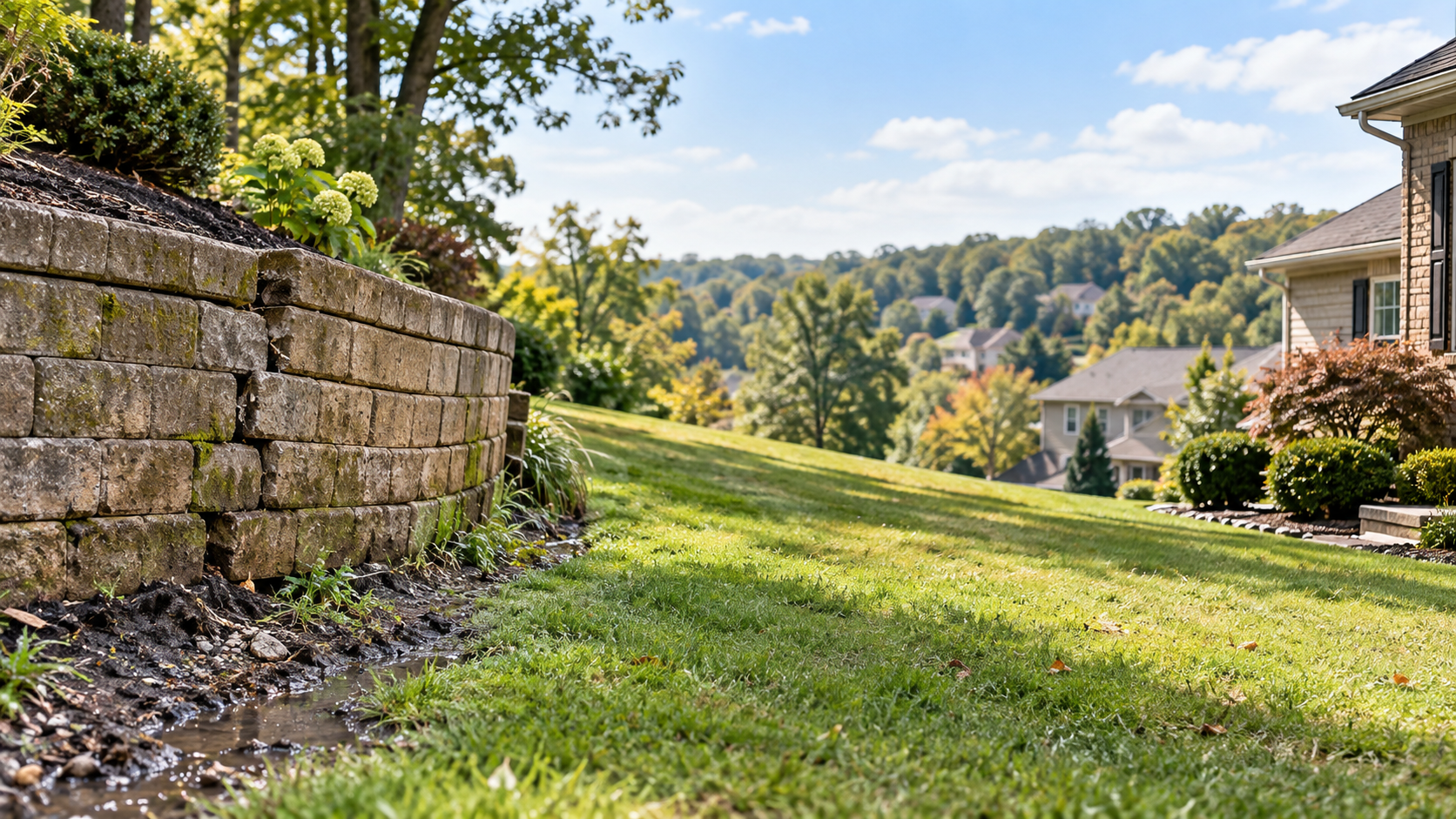
Retaining walls are especially useful in areas with hilly terrain. Many South Hills neighborhoods have properties where the front yard, backyard, driveway, or side yard sits on a noticeable grade. Without proper support, soil can shift over time, especially after heavy rain or repeated freeze-thaw cycles.
A main purpose of a retaining wall is to control erosion. A well-built wall helps hold soil in place and can reduce washout around patios, driveways, gardens, and foundations. This is especially important on properties where stormwater naturally moves downhill or where bare soil is exposed.
Retaining walls can also help homeowners create more usable yard space. A sloped backyard may be difficult to mow, landscape, or enjoy. By creating level areas, a wall can provide space for a patio, garden bed, play area, walkway, or outdoor seating. For many homeowners, this is one of the biggest benefits of South Hills retaining wall installation.
There is also an aesthetic benefit. A properly designed wall can add structure, definition, and curb appeal to a property. Whether the goal is a clean front-yard border, a terraced backyard, or a more polished outdoor living area, retaining walls can improve both function and appearance when they are planned with the home and landscape in mind.
Structural and Engineering Basics
Before choosing materials or design details, it is important to understand what a retaining wall needs to do structurally. A retaining wall must resist the pressure of the soil behind it. That pressure increases when water builds up, which is why drainage is one of the most important parts of the project.
Western Pennsylvania properties often have dense, clay-heavy soil. Clay soil can hold water, expand, and become heavy when saturated. This does not mean a retaining wall cannot be built successfully, but it does mean the wall needs proper drainage, base preparation, and backfill.
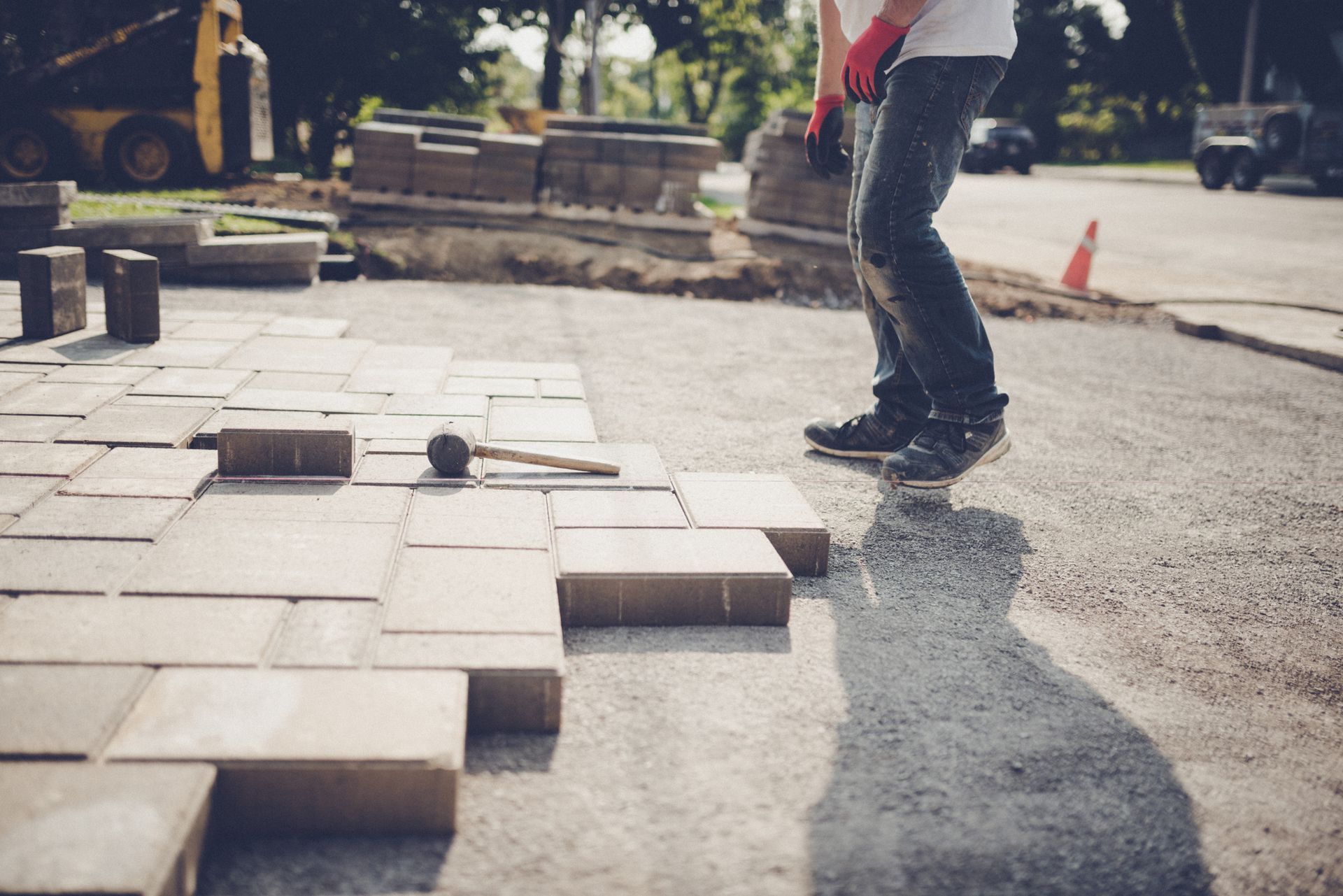
A durable wall typically starts with excavation and a compacted base. The base helps keep the wall level and stable. If the base is not prepared correctly, the wall may settle unevenly, lean, crack, or separate over time.
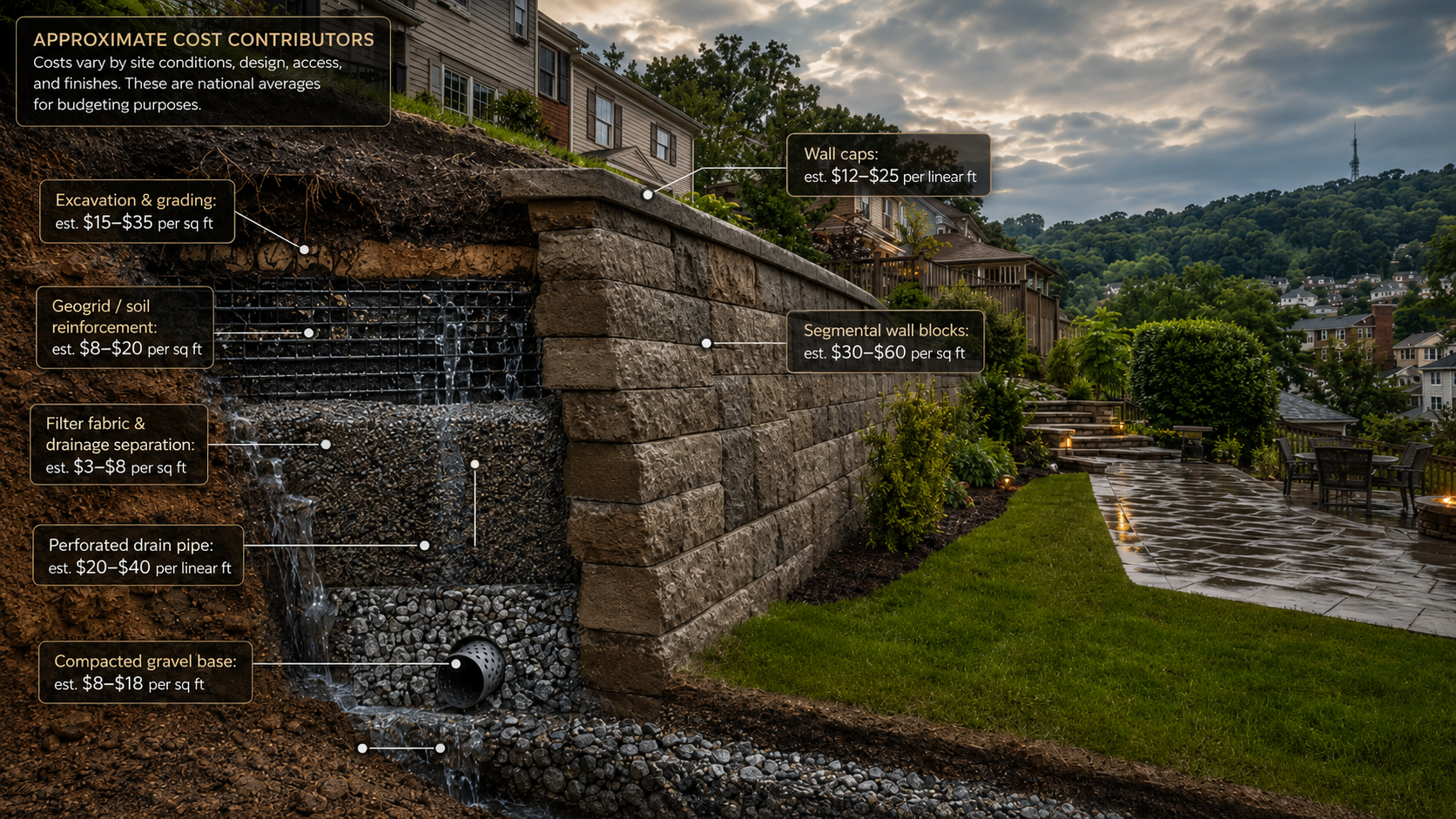
Drainage systems are also critical. Depending on the wall and site conditions, drainage may include clean stone behind the wall, perforated pipe, filter fabric, and a proper outlet for water. The goal is to prevent hydrostatic pressure from building behind the wall. When water has nowhere to go, it can push against the wall, contributing to failure.
Wall height also matters. Short garden walls may be fairly straightforward, while taller walls often require additional reinforcement or engineering guidance. Some walls may need geogrid reinforcement, stepped construction, or special design considerations based on the slope, soil, and load above the wall.
Improper retaining walls often fail for the same reasons: poor drainage, weak base preparation, lack of reinforcement, incorrect backfill, or underestimating the force of soil and water. This is why hiring an experienced retaining wall contractor can make a major difference.
Planning Your Retaining Wall Project
A successful retaining wall project starts with planning. Before installation begins, homeowners should consider the wall's purpose, location, height, drainage needs, and how the surrounding property will be affected.
Permits and local requirements are an important part of this step. Requirements can vary by municipality, and Carnegie, South Hills boroughs, and nearby townships may have different rules for retaining walls based on height, location, property lines, or proximity to structures. Homeowners should verify local requirements before work begins. A professional retaining wall company in Pittsburgh can often help identify what questions need to be asked and what information may be needed.
Utility marking is another important step. Before excavation, underground utilities should be marked through Pennsylvania's standard utility notification process. This helps reduce the risk of hitting gas, electric, water, sewer, or communication lines.
Property lines should also be considered. A retaining wall placed too close to a neighboring property can lead to disputes or drainage concerns. If the wall is near a boundary, fence, driveway, or shared slope, it may be wise to confirm the property line before construction.
Site access can also affect the project. Many older neighborhoods in Carnegie and the South Hills feature narrow driveways, tight side yards, mature landscaping, and limited access to equipment. These conditions can influence excavation methods, material delivery, project timeline, and labor needs.
Grading is another key consideration. A retaining wall should fit into the overall drainage and elevation plan for the yard. The area above and below the wall may need to be graded so water moves safely and does not collect where it can cause future problems.
Design and Material Options
Retaining walls can be constructed from several materials, and the right choice depends on the wall's purpose, height, budget, style, and maintenance expectations.
Concrete block systems are a common option for residential retaining walls. They are designed for strength, consistency, and a clean finished appearance. Segmental block walls can work well in many landscapes and are available in a range of colors, textures, and styles.
Natural stone offers a more traditional look and can blend nicely with Pittsburgh-area homes, especially older brick, stone, or craftsman-style properties. Stone can create a timeless appearance, though installation methods and structural needs vary based on the wall type and site conditions.
Timber walls may be used in some landscape applications, but homeowners should understand that wood generally has a shorter lifespan than stone or concrete systems. Moisture exposure, soil contact, and age can all affect durability. For long-term retaining needs, many homeowners choose block or stone instead.
The wall should also fit the property's style. A backyard retaining wall in Pittsburgh does not need to feel disconnected from the home. The material, color, shape, and layout should work with existing patios, walkways, steps, garden beds, and exterior features.
Functional add-ons can make the wall more useful. Steps can improve access between levels of the yard. Seating walls can support outdoor entertaining areas. Terraced walls can create planting zones or break up a steep slope into more manageable, usable sections.
What to Expect from a Retaining Wall Contractor
A professional retaining wall contractor should do more than stack blocks or stones. The contractor should evaluate the site, discuss the wall's purpose, consider drainage, review access, and explain the installation process.
The process often begins with a consultation or site visit. During this stage, the contractor may assess the slope, soil, water flow, nearby structures, access points, and the condition of any existing walls. They should also discuss what the homeowner wants to accomplish, whether that is stabilizing a slope, replacing a failing wall, expanding usable space, or improving the landscape design.
From there, the project may include planning, material selection, excavation, base preparation, wall construction, drainage installation, backfilling, grading, and cleanup. The timeline will depend on the size and complexity of the wall, site access, weather, materials, and whether permits or engineering are needed.
Before hiring retaining wall installers near me, homeowners should ask practical questions, such as:
- What type of wall do you recommend for this site?
- How will drainage be handled?
- Will the wall need reinforcement?
- Are permits or municipal approvals required?
- How will excavation and access be managed?
- What materials do you recommend and why?
- What maintenance should I expect after installation?
Clear answers to these questions can help homeowners feel more confident before the project begins.
When to Call a Retaining Wall Company in Pittsburgh
Some retaining wall needs are obvious. If an existing wall is leaning, bulging, cracking, separating, or allowing soil to wash out, it should be evaluated. These can be signs that the wall is no longer performing properly.
Other signs may be less dramatic. Pooling water, erosion on a slope, mulch or soil washing into the driveway, an unusable steep yard, or repeated drainage issues can all indicate that a retaining wall may help.
Homeowners often wonder who builds retaining walls and whether a project can be handled as a DIY job. Small decorative garden walls may be manageable for some homeowners, but structural retaining walls require more planning. Once a wall is holding back a slope, supporting a grade, or dealing with drainage, professional guidance is usually the safer choice.
A poorly built wall can become more expensive to fix later, especially if it fails, damages landscaping, affects drainage, or needs to be removed and rebuilt. Working with an experienced retaining wall company in Pittsburgh can help ensure the project is planned around the property's actual conditions.
Call G's Landscaping About Retaining Walls in Carnegie and the South Hills
If you are planning a retaining wall installation in Carnegie, PA, or anywhere in the South Hills of Pittsburgh, G's Landscaping can help you evaluate your property and understand your options.
From slope management and drainage concerns to backyard upgrades and landscape design, the right retaining wall can improve both the function and appearance of your outdoor space. G's Landscaping brings local knowledge of the terrain in Carnegie and the South Hills, helping homeowners plan retaining walls that fit their property, goals, and long-term needs.
To get started, contact G's Landscaping to schedule a consultation and discuss the best approach for your retaining wall project.