What Should Pittsburgh Homeowners Know Before Installing a Paver Patio?
What Should Pittsburgh Homeowners Know Before Installing a Paver Patio?
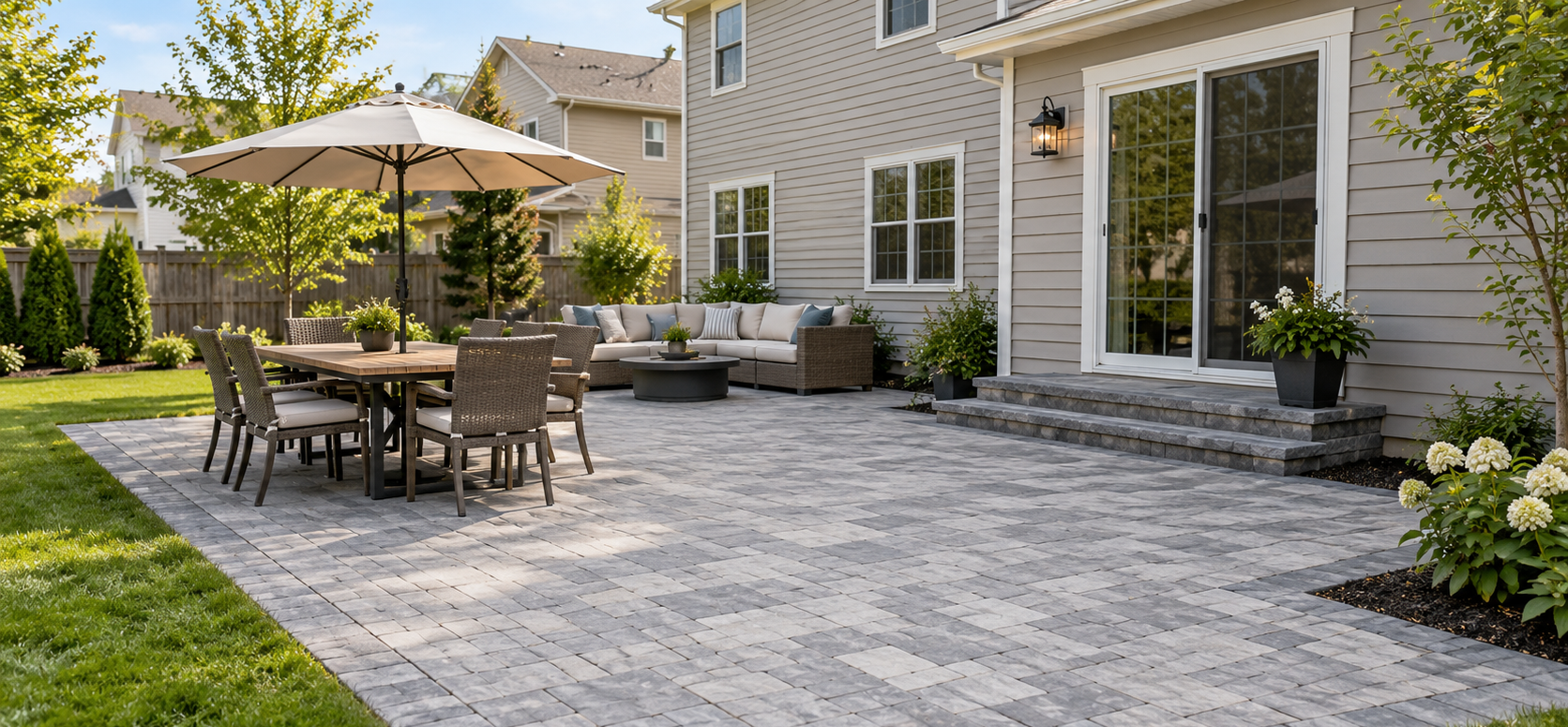
Installing a paver patio can turn part of a yard into a more useful space for dining, grilling, seating, entertaining, or spending time outdoors. It can also create a more practical connection between the home, lawn, walkways, and surrounding landscaping.
However, finished pavers are only one part of a successful patio project.
Before paver patio installation begins, consider the location and surrounding property. In Pittsburgh and the South Hills, that can include hills, changing elevations, runoff, freeze-thaw conditions, established landscaping, older properties, and limited backyard access.
A well-planned patio starts with how the new outdoor space fits the property, not simply by choosing a paver style.
How Should You Choose the Best Location for a Paver Patio?
The best patio location works with how you plan to use your yard. Appearance matters, but access, circulation, privacy, sunlight, elevation, and surrounding features should also influence the decision.
Think about how people will move between the house and patio. A location near the kitchen or a frequently used exterior door may be convenient for dining and grilling. Existing stairs, pathways, planting beds, neighboring properties, and areas of sun and shade may also affect where the patio makes the most sense.
It also helps to picture the space after you add furniture. An open area may seem large when it is empty but feel much smaller after you add a dining table, chairs, a grill, planters, or other outdoor features.
Rather than starting with dimensions alone, start with how you want to use the space.
Why Does Yard Slope Matter When Planning a Paver Patio?
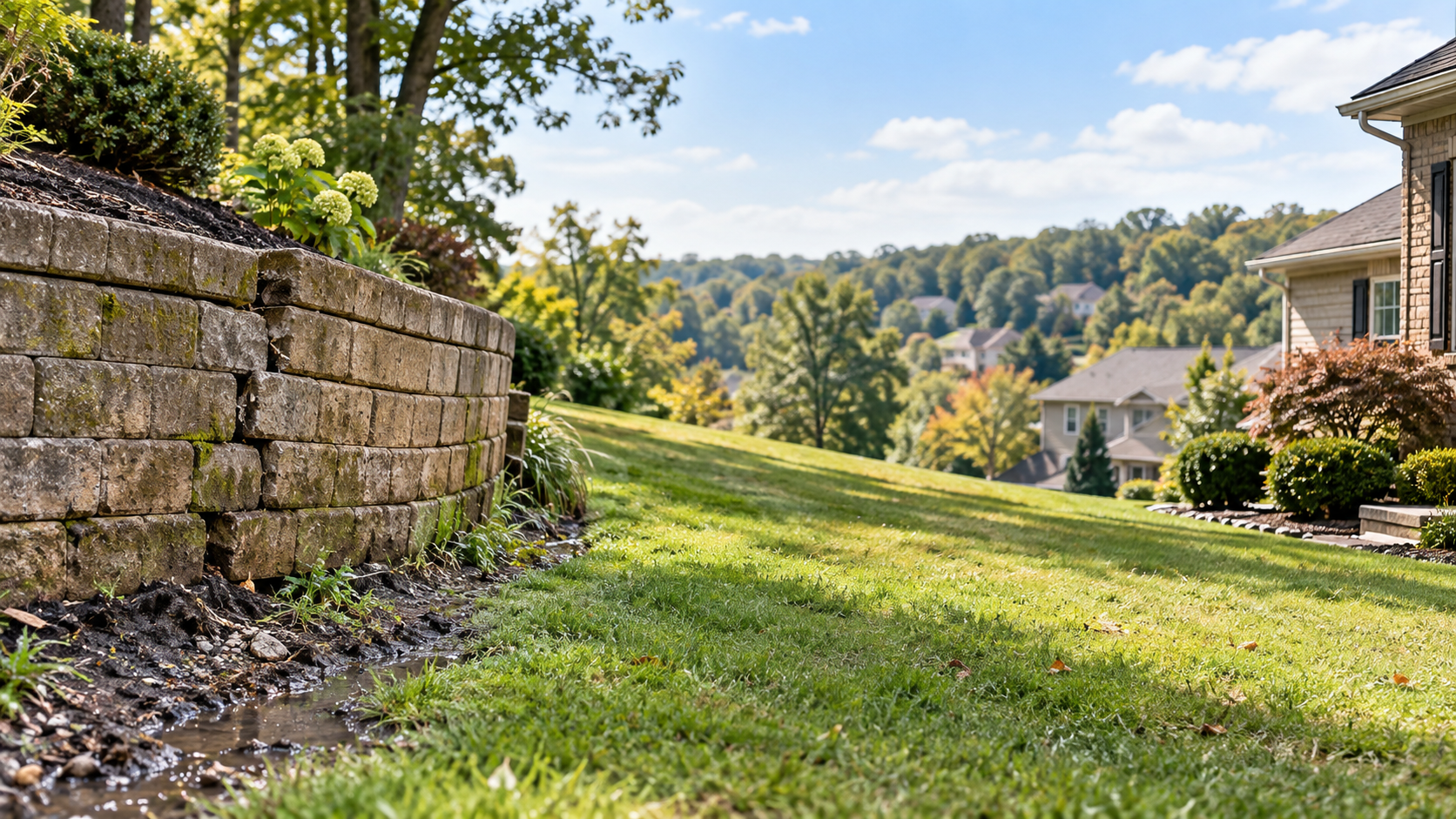
Yard slope matters because a patio needs a planned, usable surface that fits the surrounding elevations. On Pittsburgh and South Hills properties with noticeable grade changes, you often need to consider the patio and surrounding terrain together.
Depending on the property, creating the desired space may involve excavation, grading, steps, retaining structures, or other ways of transitioning between elevations.
This does not mean a sloped property is automatically unsuitable for a patio. It means you should evaluate the existing grade before deciding where the patio belongs and how the finished area should connect to the rest of the yard.
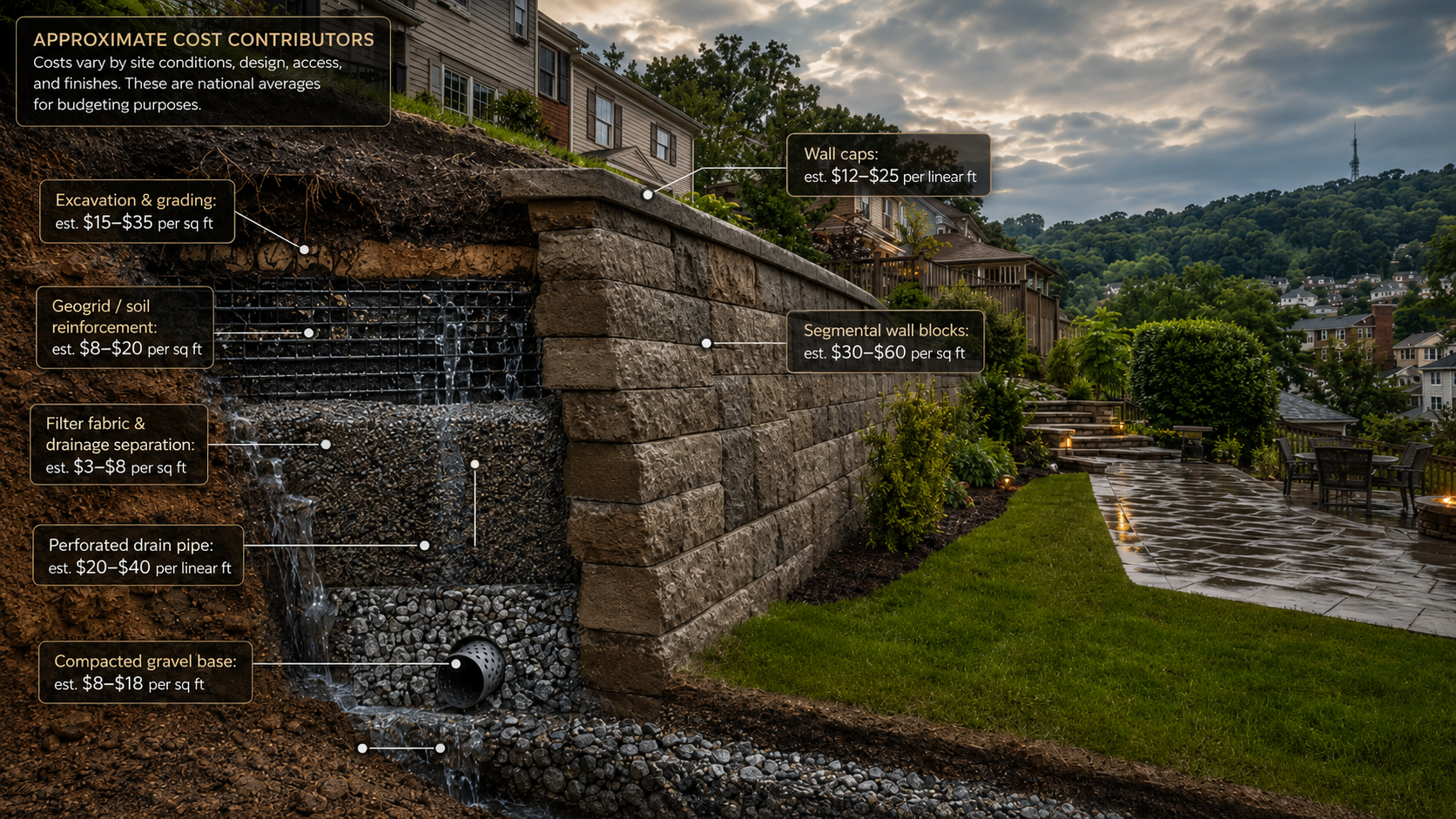
When grade changes are significant, retaining wall installation may also become part of the overall plan because retaining walls can create usable, level outdoor areas.
Can You Build a Paver Patio on a Sloped Pittsburgh Backyard?
Potentially, yes. A sloped Pittsburgh backyard may still accommodate a paver patio, but the appropriate approach depends on the property's elevation, drainage, available space, access, and the intended patio location.
A contractor may need to consider how much the grade changes, where the patio will sit in relation to the house, how people will reach the space, and whether steps or retaining structures are needed.
Nearby buildings, existing landscaping, desired patio dimensions, and water movement may also influence the plan.
The key question isn't simply whether the yard has a slope. It is whether you can create a practical patio area while accounting for the surrounding property.
Why Is Proper Drainage Important Around a Paver Patio?
Consider drainage before installing the patio because adding hardscape changes the existing landscape. Water that already reaches or moves through that area still needs an appropriate path.
A site evaluation may need to consider water coming from higher parts of the yard, downspout discharge, existing low areas, water moving toward the home, nearby retaining walls, surrounding lawn areas, and neighboring properties.
Drainage is also connected to grading. You can't consider the patio separately from how water behaves around the finished space.
The exact drainage approach will vary from property to property. The main point for homeowners is to identify existing water conditions during the planning stage rather than treating them as an unrelated concern after the patio is complete.
Why Does What Goes Under a Paver Patio Matter So Much?
The finished pavers depend on the area prepared beneath them. Proper site preparation creates the foundation that supports the patio, helps maintain planned elevations, and reduces the potential for uneven settlement.
Much of this work is no longer visible once the patio is finished, making it easy for homeowners to focus on the pavers themselves.
Two patios can look similar immediately after installation while being very different underneath.
That is why discussions about a paver patio project should include more than color, shape, and pattern. Excavation, site conditions, base preparation, grading, and drainage all affect how the finished patio will perform on the property.
Homeowners do not need to know the technical specifications for every layer. They should understand what site preparation includes and why it fits their project.
How Do Pittsburgh Freeze-Thaw Cycles Affect Paver Patios?
Pittsburgh's winter conditions include repeated periods of freezing and thawing. Moisture in the ground can freeze, expand, thaw, and move as conditions change.
Because of that, drainage, grading, base preparation, and installation quality matter when planning a paver patio in Western Pennsylvania.
Freeze-thaw conditions don't automatically mean a patio will develop problems. They are simply part of the local environment that needs to be considered when preparing the site and managing water around the finished hardscape.
This is another reason the work below the visible pavers matters. The patio needs to be planned for the property and local conditions, not treated only as a decorative surface.
How Can Backyard Access Affect Paver Patio Installation?
Backyard access can affect how a patio project is approached because materials must enter the property, and excavated soil or existing materials may need to be removed.
Some older South Hills properties have narrow side yards, fences, gates, stairs, established landscaping, sloped driveways, or neighboring houses positioned relatively close together. These conditions can limit how equipment and materials move through the site.
Limited access does not necessarily prevent paver patio installation. It may change how you transport materials, handle excavation, and organize the work area.
That is why you should evaluate access before the project begins, not after materials arrive.
How Large Should Your New Paver Patio Be?
The right patio size depends on what you want to do there. Instead of choosing dimensions based only on how much yard is available, consider the furniture, activities, and movement the space needs to accommodate.
A patio may include a dining table, chairs, grill, seating area, planters, a fire feature, or space for guests. Each of those uses requires room, but circulation matters too.
For example, someone sitting at a table should not completely block the primary route between the house and the yard. Grill placement should also make sense in relation to seating and normal movement through the space.
Planning around activities and furniture first can help determine dimensions that fit how the patio will actually be used.
Should Your Patio and Retaining Walls Be Planned Together?
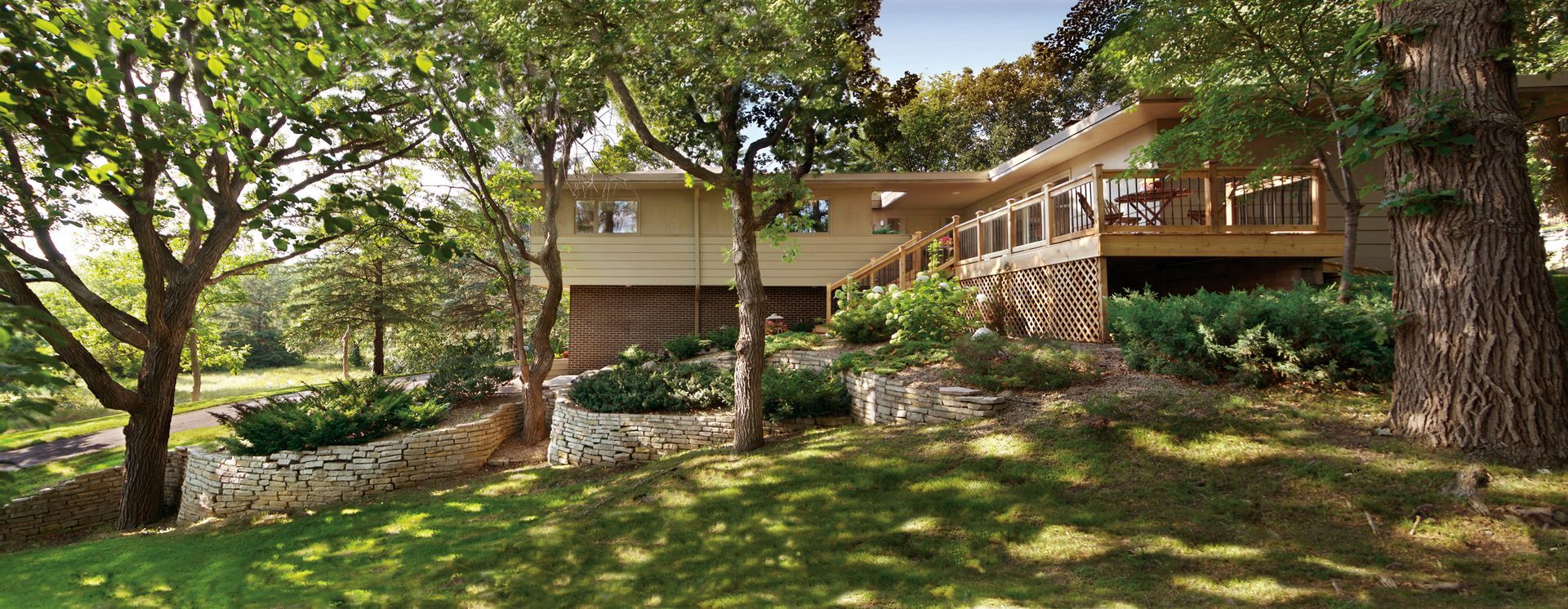
If a property has significant elevation changes and you're considering both a patio and a retaining wall, planning them together can help the finished outdoor space function as one connected area.
The relationship between these features may affect elevations, drainage, stairs, walkways, planting beds, transitions between spaces, and available patio area.
This does not mean every patio requires a retaining wall. On relatively level properties, a retaining structure may have no role in the project.
On sloped properties, however, treating the patio and surrounding hardscape as parts of the same plan can make it easier to understand how the finished space should connect to the yard.
How Should a Paver Patio Connect With Walkways and Landscaping?
A patio usually works better when planned as part of the surrounding landscape rather than as an isolated hardscape area.
Consider how the patio will connect with exterior doors, paver walkways, lawn areas, garden beds, stairs, retaining walls, driveways, planting areas, and landscape lighting.
Materials and design choices can also help the patio fit the home's architecture and existing property. Paver colors, borders, shapes, and textures may influence how naturally the new surface relates to nearby features.
You don't need to make these decisions separately. Looking at the entire area can help create clearer transitions between the patio and the rest of the property.
What Should You Ask a Paver Patio Contractor Before Hiring Them?
Before selecting a paver patio contractor in Pittsburgh, ask questions that help you understand how they'll evaluate the entire property, not just what paver products are available.
Useful topics to discuss include:
- How the proposed patio location will be evaluated
- How drainage and existing water movement will be considered
- What excavation, grading, and site preparation are included
- How restricted backyard access will be handled
- Which paver materials are appropriate for the project
- How the patio will transition into surrounding landscaping
- Whether retaining walls, walkways, or other hardscape should be planned at the same time
- What cleanup and property restoration are included after installation
These questions clarify the project scope and what is being considered before installation begins.
Homeowners comparing options can also review G's Landscaping's Pittsburgh hardscaping services for additional information about paver patios and related hardscape work.
Does a Paver Patio Require Maintenance After Installation?
Yes. Paver patios are not maintenance-free, although the type and amount of upkeep can vary.
Routine considerations may include surface cleaning, joint material, weeds or organic growth where applicable, settling, and damaged individual pavers.
One practical advantage of interlocking pavers is that you can often address or replace individual units instead of treating the patio as one continuous concrete surface.
Detailed maintenance needs will depend on the patio, materials, surrounding landscape, and conditions over time.
What Should Pittsburgh Homeowners Consider Before Requesting a Paver Patio Estimate?
Before requesting an estimate, it helps to have a general idea of what you want from the patio and what existing property conditions may affect the project.
Consider the intended use, approximate location, desired size, drainage concerns, slopes, backyard access, existing patios or structures that may need to be removed, and whether you're also considering retaining walls or walkways.
You can also think about general design preferences, such as how you want the patio to connect to the house and surrounding landscaping.
You do not need to solve every site issue before contacting a contractor. Part of an on-site consultation is evaluating the property and identifying considerations that may not be obvious before the area is examined in person.
Frequently Asked Questions About Paver Patios
Can paver patios handle Pittsburgh winters?
Yes. Paver patios can work in Western Pennsylvania when the site, drainage, base, grading, and installation are properly planned for the property and local climate.
Can I install a paver patio on a sloped yard?
Often, yes. Sloped yards may require additional grading, excavation, steps, retaining walls, or other site planning before you can create a usable patio area.
Does a paver patio need drainage?
Always consider drainage when planning a patio. The right approach depends on the property's grade, runoff, surrounding structures, soil conditions, and how water already moves through the site.
Why do some paver patios become uneven?
Uneven areas can develop for several reasons, including conditions beneath the patio, drainage problems, soil movement, settlement, or inadequate site preparation. You need to evaluate the specific cause rather than assume it.
Can individual patio pavers be replaced?
Often, yes. One advantage of interlocking pavers is that you can often address individual damaged units without replacing the entire patio surface.
Do I need a retaining wall with a paver patio?
Not necessarily. A retaining wall may be part of the project when you need to manage significant grade changes or create additional level outdoor space on a sloped property.
How do I know what size patio I need?
Start with how you plan to use the patio. Consider furniture, dining, grilling, entertaining, circulation, access to the house, and connections to the surrounding yard before deciding on dimensions.
Planning a Paver Patio for Your Pittsburgh Property?
A useful paver patio plan starts with understanding the property and the homeowner's goals.
G's Landscaping can evaluate the proposed patio area, slope, access, drainage, surrounding landscaping, and intended use before discussing potential patio options.
Homeowners in Pittsburgh, Carnegie, and the South Hills can contact G's Landscaping to discuss their outdoor space and schedule an on-site consultation.